
VW Beetle Engine Leaking Oil
Seal Leaks Effectively
With the VW Beetle, oil-moist engines, oil drops underneath the vehicle, or oil-contaminated cooling fins are technically not uncommon. The cause is usually aged seals – especially shaft seals and rubber gaskets that lose their elasticity over the years. These no longer seal properly and lead to the typical oil leaks.
With LecWec, you can restore the functionality of these seals directly during operation without dismantling the engine or opening the housing.
✓Oil Stop Leak for classic Beetle engines
✓Targets shaft seals and rubber gaskets specifically
✓Oil sealant without chlorine
✓Seal the engine without removal

How LecWec Works in VW Beetle Engines
VW Beetle engines use different types of seals: shaft seals and rubber gaskets as well as cork and paper gaskets. Polymer-based seals lose their plasticizers over time due to heat, aging, and long periods without operation. They become hard, shrink, and lose their sealing performance. This is exactly where LecWec takes effect during normal operation.
After being added, LecWec circulates through the engine oil and reaches all relevant sealing points. The active formula is absorbed by the polymer seals and helps restore their original properties. The material becomes flexible again and fits tightly against the sealing surfaces. This closes the typical leakage gaps found at shaft seals and rubber gaskets.
In practical use, this means that oil loss is significantly reduced or stopped, provided the cause is aged seals. LecWec does not work directly on cork or paper gaskets, but it can restore the sealing performance of the overall system when the main leakage originates from polymer sealing points.
Only 3% of the total oil quantity.
LecWec is chlorine-free.
For all oil systems and types.
Direct delivery from the manufacturer.
It happened even faster than I expected.
"I have to report positively that the level matches the oil... unbelievable. [...] I wouldn’t have believed that the steering gearbox would be sealed again after just under a week."
Play video on YouTube.By clicking play, you agree to YouTube’s privacy policy.
"...nothing was leaking anymore!!!
I am truly very satisfied. At first, I did not believe the product would work, but now I am completely convinced and also saved many hundreds of euros!"
- Jürgen R.
Oil leak at the cylinder base gasket
All published reviews are from genuine customers. You can find more information at Authenticity of Customer Reviews.
"I did not believe it at first, but your product is excellent! [...] I ordered just one can and everything is sealed already, even though you recommend 2 cans, meaning 200 ml, for 6 liters of oil. Many thanks!"
- Andreas F.
Oil leak problems at the oil flange gasket
All published reviews are from genuine customers. You can find more information at Authenticity of Customer Reviews.
"...which made it even more satisfying when, after around 3 weeks, I noticed that the oil loss had gone down to zero – the steering rack was sealed again!! Even now, after 4 months, the reservoir is still at the maximum level."
- Friedger F.
Oil leak at the steering rack
All published reviews are from genuine customers. You can find more information at Authenticity of Customer Reviews.
"There was always a small puddle of oil collecting underneath the vehicle. I added 100 ml of LecWec to around 4 liters of oil. Since then, I have driven many miles and was surprised to find that there was no more oil on the ground at all."
- Paul R.
Leak at the oil pan
All published reviews are from genuine customers. You can find more information at Authenticity of Customer Reviews.

How to Seal a VW Beetle Engine in 3 Steps
If your Beetle engine is leaking oil, this is usually noticeable through an oil film on the engine housing, oil drops underneath the vehicle, or oil-contaminated components. In many cases, aged shaft seals or rubber gaskets are the cause. Instead of dismantling the engine, you can address the issue directly within the system.
Step 1: Check the oil level and identify typical leak points (for example crankshaft or pushrod tubes).
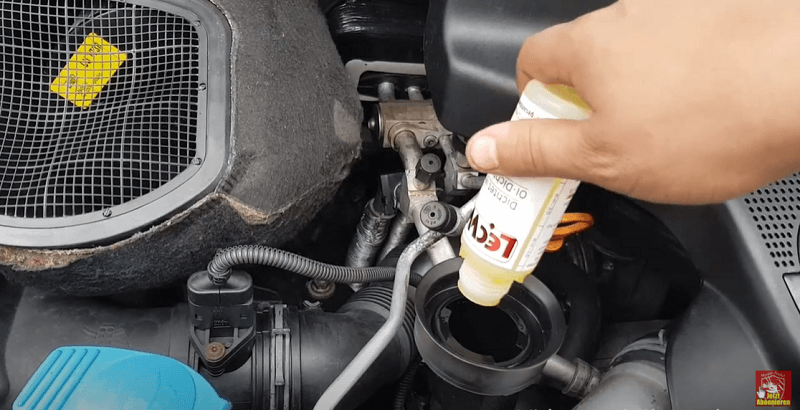
Step 2: Add LecWec directly to the engine oil at a ratio of 3% of the total oil volume.
Step 3: Drive the vehicle normally – the additive will circulate throughout the entire oil system.
The polymer seals absorb the active formula, become flexible again, and fit tightly against the sealing surfaces once more. This reduces or stops oil leaks at typical weak points. You avoid opening the engine and preserve the original condition of your Beetle.
VW Beetle Engine Leaking Oil? These 5 Tips Help
Check Typical Leak Points Carefully
On the VW Beetle, oil leaks commonly occur at crankshaft seals, pushrod tubes, or valve covers. Clean the engine thoroughly and observe exactly where fresh oil film appears.
Evaluate the Type of Seal Correctly
On the Beetle, shaft seals and rubber seals respond particularly well to LecWec. Traditional cork or paper gaskets can only be influenced to a limited extent. Therefore, the source of the leak should be identified as precisely as possible.
Avoid Long Periods of Inactivity
Long standstill periods cause seals to dry out and lose elasticity. Regular operation and engine temperature help keep seals flexible.
Avoid Unnecessary Engine Disassembly
Opening a Beetle engine always involves effort and risk for original components and tolerances. For this reason, it makes sense to first treat the system through the oil circuit before carrying out mechanical repairs.
Use LecWec Correctly and Monitor the Result
Add LecWec directly to the engine oil at 3% of the total oil volume and drive the Beetle regularly. Afterwards, inspect the known sealing points. In many cases, oil loss is significantly reduced or completely stopped.