LECWEC Logo 2LECWEC Logo 2LECWEC Logo 2LECWEC Logo 2
  • Advantages
  • Videos & Feedback
  • LecWec
  • FAQ
  • Contact
  • 🇩🇪
  • 🇫🇷
  • Advantages
  • Videos & Feedback
  • LecWec
  • FAQ
  • Contact
  • 🇩🇪
  • 🇫🇷

Hydraulic Cylinder Leaking Oil
Stop Oil Leaks Directly During Operation


If your hydraulic cylinder is leaking oil, the piston rod is covered with oil or hydraulic pressure is dropping, the cause is usually aged or hardened seals. Under pressure and constant movement, these seals lose their sealing ability over time. With LecWec, you can restore the sealing effect directly during operation without dismantling the cylinder.

✓Oil leak stop for hydraulic cylinders
✓Long-lasting sealing effect for many years
✓Oil sealing additive without chlorine
✓Seal leaks without dismantling or downtime


Order Now
Lecwec Flasche 100ml final Pfade

How LecWec Works in Hydraulic Cylinders

Hydraulic cylinders use polymer seals at the piston and guide elements to keep the oil inside the system under high pressure. Due to movement, pressure and temperature, these seals lose elasticity over time. The result: oil begins leaking at the piston rod or housing seals. This is exactly where LecWec works during normal operation.

After being added, LecWec distributes through the hydraulic oil and reaches all sealing points inside the system. The active ingredients are absorbed by the seals and help the material become flexible, supple and tightly sealing once again. This closes the fine gaps between the seal and the metal surface, even under pressure.

In practical use, this means that oil leaks at the hydraulic cylinder are greatly reduced or stopped completely. LecWec restores the sealing function of the existing components and allows safe continued operation without dismantling.


Only 3% of the total oil quantity.

LecWec is chlorine-free.

For all oil systems and types.

Direct delivery from the manufacturer.
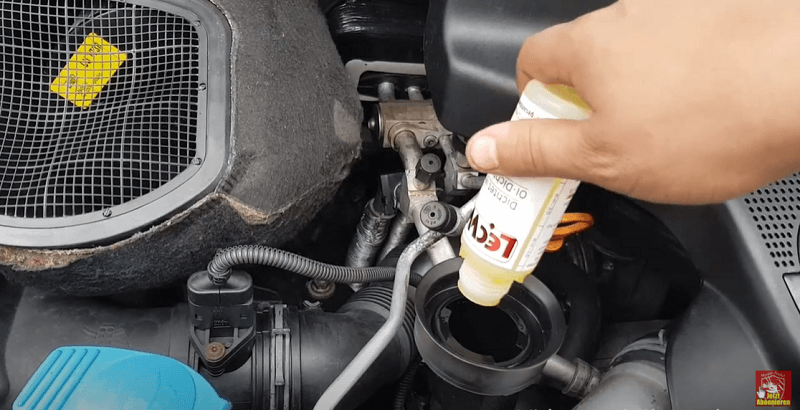
LecWec Erfahrung im Video

It happened even faster than I expected.

"I have to report positively that the level matches the oil... unbelievable. [...] I wouldn’t have believed that the steering gearbox would be sealed again after just under a week."

Play video on YouTube.

By clicking play, you agree to YouTube’s privacy policy.


"...nothing was leaking anymore!!! I am truly very satisfied. At first, I did not believe the product would work, but now I am completely convinced and also saved many hundreds of euros!"
- Jürgen R.

Oil leak at the cylinder base gasket

Verified review (Learn more)

"I did not believe it at first, but your product is excellent! [...] I ordered just one can and everything is sealed already, even though you recommend 2 cans, meaning 200 ml, for 6 liters of oil. Many thanks!"
- Andreas F.

Oil leak problems at the oil flange gasket

Verified review (Learn more)

"...which made it even more satisfying when, after around 3 weeks, I noticed that the oil loss had gone down to zero – the steering rack was sealed again!! Even now, after 4 months, the reservoir is still at the maximum level."
- Friedger F.

Oil leak at the steering rack

Verified review (Learn more)

"There was always a small puddle of oil collecting underneath the vehicle. I added 100 ml of LecWec to around 4 liters of oil. Since then, I have driven many miles and was surprised to find that there was no more oil on the ground at all."
- Paul R.

Leak at the oil pan

Verified review (Learn more)
3 Flaschen LecWec final Pfade

How to Seal a Hydraulic Cylinder in 3 Steps

If your hydraulic cylinder is leaking oil, this is usually noticeable through oil-moist piston rods, oil drops, or pressure loss. The cause is usually aged polymer seals. Instead of removing the cylinder immediately, you can address the issue directly within the system.

Step 1: Check the oil level in the hydraulic system and determine the total oil volume.
Step 2: Add LecWec to the hydraulic reservoir at a ratio of 3% of the total oil volume.
Step 3: Operate the cylinder normally – movement will distribute the additive throughout the entire system.

The seals absorb the active formula, become flexible again, and fit tightly against the sealing surfaces once more. This stops oil leaks at the piston rod or sealing points. You avoid removing components and restore the hydraulic cylinder to a sealed operating condition.

Hydraulic Cylinder Leaking? These 5 Tips Can Help

Analyze the leak location precisely
Clean the piston rod and cylinder area thoroughly. Extend and retract the cylinder to determine exactly where the oil is leaking.

Inspect the piston rod for damage
Scratches, corrosion, or surface damage can cause leaks. A smooth surface is essential for proper sealing performance.

Check the system pressure
Excessive pressure places additional stress on the seals. Make sure the cylinder operates within the specified range.

Restore seals directly
Hydraulic cylinders use polymer seals that harden over time. Through targeted treatment within the system, their elasticity can be restored.

Use LecWec correctly and monitor the results
Add LecWec to the system at a ratio of 3% of the total oil volume and continue operating the cylinder normally. Afterwards, check the sealing performance. In many cases, the oil leak is significantly reduced or completely stopped.

Questions and Answers about LecWec

How Does LecWec Work?
Replacing a leaking oil seal is usually not an inexpensive repair. If an entire component needs to be replaced, the costs increase even further. Since 1995, however, “LecWec” has provided a permanent repair solution for polymer oil seals without disassembly or replacement, and without major time or repair costs. LecWec is not only effective for vehicles, but for all oil systems and all types of oil. Over time, polymer oil seals lose their plasticizers, become brittle, and shrink. LecWec impregnates the seal material and replaces the lost plasticizers. The seal becomes flexible again and expands slightly – exactly enough to compensate for wear at the sealing lip.
3How Much LecWec Do I Need for My Hydraulic Cylinder?
The required amount depends on the total oil volume within the hydraulic system, not just the cylinder itself. The dosage is exactly 3% of the total oil volume. For 100 liters of hydraulic oil, this equals 3 liters of LecWec. The additive is added to the hydraulic reservoir and circulates throughout the entire system. This allows LecWec to reach the seals inside the cylinder without requiring disassembly.
How Long Does It Take for LecWec to Work?
LecWec does not work instantly but requires a certain amount of operating time to take full effect. After application, the system should initially run for some time so the product can circulate through the system and reach the affected seals. The effect then continues to develop during further operation and also during periods of inactivity. In many cases, the desired sealing effect becomes noticeable after a relatively short operating period. Depending on the condition and material of the seals, however, it may take several days for the full effect to develop. Once this process is complete, the sealing performance remains stable over the long term and can last for years.
How Long Does the Effect of LecWec Last?
The effect of LecWec is designed for long-term sealing performance. Once the product has fully developed its effect, it usually remains effective for years. The requirement is that the product has enough time to circulate through the system during operation and fully interact with the seals. For this reason, the system should initially operate for some time, after which LecWec continues working through normal operation and even during periods of inactivity. Depending on the seal material, this process can take anywhere from a few hours to several days. Once the full effect has developed, LecWec keeps the seals flexible and leak-free permanently without requiring regular reapplication.
3How Reliably Does LecWec Stop Oil Leaks?
LecWec stops oil leaks reliably and almost completely when the leak is caused by aged or hardened seals. The active formula circulates through the oil system and reaches all relevant sealing points. During operation, the seals absorb LecWec, become flexible again, and expand slightly. This allows them to fit tightly against the sealing surfaces once more and close the fine gaps through which oil previously escaped. Depending on the application, the effect begins within a few hours to several days and then remains stable over the long term.
3When Does LecWec Not Work?
The effect is limited on cork and paper gaskets. These rarely used materials can only absorb LecWec to a limited extent. In practical use, slight swelling may occur, which can reduce minor leaks. However, complete sealing of cork and paper gaskets cannot be achieved reliably. LecWec also does not work directly on metal gaskets, since these materials have no elasticity. If the oil leak is caused by adjacent polymer seals or minimal gaps, LecWec may still contribute indirectly to sealing the system.
3Do I Need to Disassemble the Hydraulic Cylinder?
No. LecWec is added directly to the hydraulic oil and works during normal operation. Disassembly of the cylinder is not required, provided the leak is caused by aged seals within the system.
5Does LecWec Also Help on Older Hydraulic Cylinders?
Yes. Especially on older hydraulic cylinders, the installed seals are often hardened or shrunken. LecWec restores the elasticity of these seals and can significantly reduce typical leaks at piston and rod seals.
6Does LecWec Help with Leaking Piston Rod Seals?
Yes. LecWec can help with leaks at piston and rod seals, provided the cause is aged sealing lips. If the piston rod itself is damaged, scratched, or worn, the effect is limited and mechanical repair is required.
6Can LecWec Also Be Used Preventively?
Yes, LecWec can also be used preventively to keep seals flexible over the long term. Especially in machines with high operating hours or long periods of inactivity, the application helps prevent seals from drying out and becoming brittle. For preventive use, a reduced dosage of 1.5% of the total oil volume is recommended. This keeps the seals elastic and significantly reduces the risk of future leaks.
Can LecWec Damage the Engine or Transmission?
No. LecWec is developed to fully blend with the existing oil without affecting lubrication performance. It does not attack metal components and does not alter system tolerances. Bearings, gears, and other components remain completely unaffected. LecWec works exclusively on the seals within the system. When used correctly and at the proper dosage of 3% of the total oil volume, the application is safe and has no negative effect on the function of the engine, transmission, or hydraulic system.
8How Much Does LecWec Cost and Where Can I Buy It?
You can buy LecWec directly online in our online shop. There you will also find all current prices. Alternatively, you can send us a message below and we will gladly help you with your question or order.

+49 89 - 90 35 638


Monday - Friday
9:00 AM - 5:00 PM


order@lecwec.de

    © LecWec
    Legal Notice | Privacy Policy | Terms and Conditions | Reviews | Hazard Information
    Richard Chambers GmbH | Dahlienweg 14, 85551 Heimstetten, Germany | +4989 - 90 35 638 | order@lecwec.de

    Seal engine oil | Engine sealant oil additive | Oil Stop Wiki | Oil additive against oil loss | Engine oil additive for sealing | Stop leaking oil on motorcycles | Engine oil sealant | Engine oil leak stop | Engine oil sealing agent | Engine oil stop | Oil stop for engines | Oil leak stop additive
    Web design with