
Mercedes W124 Leaking Oil
Fix Typical Engine Oil Leaks Effectively
With the Mercedes W124, oil-moist engines, oil drops underneath the vehicle, or oil-contaminated engine components are a well-known issue. Typical causes include valve cover gaskets, cylinder head gaskets, crankshaft seals, oil pan gaskets, or timing covers. In particular, rubber and polymer seals lose their elasticity over the years due to heat and aging and no longer provide a proper seal.
With LecWec, you can restore the functionality of these seals directly during operation without immediately dismantling the engine or replacing the seals.
✓Oil Stop Leak for typical W124 engine issues
✓Targets shaft seals and rubber gaskets specifically
✓Oil sealant without chlorine
✓Seal the engine without disassembly

How LecWec Works in Mercedes W124 Engines
In Mercedes W124 engines – whether M102, M103, M104, or OM diesel engines – different types of seals are used: shaft seals and O-rings made from polymer materials as well as paper, cork, and flat gaskets. Polymer-based seals in particular lose their plasticizers over time due to temperature, oil aging, and mileage. They become hard, shrink, and lose their sealing performance. This is exactly where LecWec takes effect during normal operation.
After being added, LecWec circulates through the engine oil and reaches all relevant sealing points directly. The active formula is absorbed by the polymer seals and helps restore their original properties. The material becomes flexible again and fits tightly against the sealing surfaces. This closes the typical leakage gaps found at the crankshaft, camshaft, and auxiliary components.
In practical use, this means that oil loss is significantly reduced or stopped, provided the cause is aged seals. LecWec does not work directly on paper or metal gaskets, but it can restore the sealing performance of the overall system when the main leakage originates from polymer sealing points.
Only 3% of the total oil quantity.
LecWec is chlorine-free.
For all oil systems and types.
Direct delivery from the manufacturer.
It happened even faster than I expected.
"I have to report positively that the level matches the oil... unbelievable. [...] I wouldn’t have believed that the steering gearbox would be sealed again after just under a week."
Play video on YouTube.By clicking play, you agree to YouTube’s privacy policy.
"...nothing was leaking anymore!!!
I am truly very satisfied. At first, I did not believe the product would work, but now I am completely convinced and also saved many hundreds of euros!"
- Jürgen R.
Oil leak at the cylinder base gasket
Verified review (Learn more)"I did not believe it at first, but your product is excellent! [...] I ordered just one can and everything is sealed already, even though you recommend 2 cans, meaning 200 ml, for 6 liters of oil. Many thanks!"
- Andreas F.
Oil leak problems at the oil flange gasket
Verified review (Learn more)"...which made it even more satisfying when, after around 3 weeks, I noticed that the oil loss had gone down to zero – the steering rack was sealed again!! Even now, after 4 months, the reservoir is still at the maximum level."
- Friedger F.
Oil leak at the steering rack
Verified review (Learn more)"There was always a small puddle of oil collecting underneath the vehicle. I added 100 ml of LecWec to around 4 liters of oil. Since then, I have driven many miles and was surprised to find that there was no more oil on the ground at all."
- Paul R.
Leak at the oil pan
Verified review (Learn more)
How to Seal a Mercedes W124 Engine in 3 Steps
If your W124 is leaking oil, this is usually noticeable through an oil film on the engine block, oil drops underneath the vehicle, or oil traces at typical leak points. In many cases, aged shaft seals or valve cover gaskets are the cause. Instead of planning major repairs immediately, you can address the issue directly within the system.
Step 1: Check the oil level and identify typical leak points (for example valve cover, crankshaft, or timing cover).
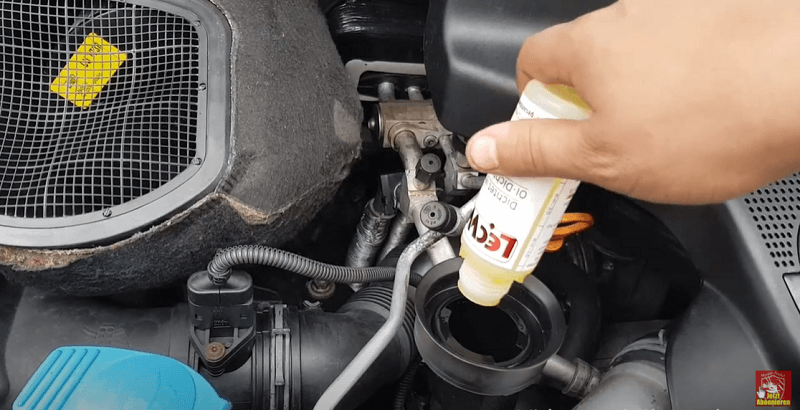
Step 2: Add LecWec directly to the engine oil at a ratio of 3% of the total oil volume.
Step 3: Drive the vehicle normally – the additive will circulate throughout the entire oil system.
The polymer seals absorb the active formula, become flexible again, and fit tightly against the sealing surfaces once more. This reduces or stops oil leaks at typical W124 weak points. You avoid unnecessary disassembly and keep the engine reliably sealed.
Mercedes W124 Oil Leak? These 5 Tips Help
Know the Typical W124 Leak Points
Valve cover gasket, crankshaft seals, oil pan gasket, and timing cover are among the most common causes. Clean the engine thoroughly and inspect the suspected areas carefully.
Do Not Confuse It with a Head Gasket Leak
On the W124, oil leaks can also originate from the cylinder head gasket. This is a different type of issue and must be evaluated mechanically.
Check the Crankcase Ventilation System
A clogged crankcase ventilation system increases pressure inside the engine and can worsen oil leaks. Inspect the condition of the system carefully.
Restore Aged Seals Directly in the System
Many components in the W124 use shaft seals and rubber gaskets that harden over time. This is exactly where LecWec can restore sealing performance.
Use LecWec Correctly and Monitor the Result
Dose LecWec at 3% of the total oil volume and drive the vehicle normally. Then monitor the known leak points. In many cases, the oil loss is significantly reduced or stopped completely.